

BlogPlaybook
AI for Marketing: The Workflows That Actually Save Time
Most 'AI marketing' advice is either magic-button hype or a list of tools. Here are the specific marketing workflows AI genuinely speeds up — and the ones where a human still has to stay in charge.
 Vitalij Kolotikov 6 min read
Workflow estimator
Estimate the repetitive work in one content workflow
This is not a promise of ROI. It exposes the volume of reformatting work worth testing with AI.
There are two kinds of “AI for marketing” advice, and both are unhelpful. The first promises AI will run your marketing while you sleep. The second is a list of ninety tools with no sense of which matter. Neither tells you the one useful thing: which specific jobs does AI genuinely make faster, and which should you keep your hands on?
AI doesn’t do your marketing. It speeds up the parts you already understand — the drafting, repurposing, briefing and research that quietly eat your week — so you spend more time on the strategy and creativity it can’t do. Here are the workflows where that pays off, and how to run them without lowering your standards.
Where AI genuinely saves time
These are the workflows that come up again and again — the ones worth setting up first:
1. Turn one piece of content into five
This is the single biggest time-saver in marketing. You write one good thing — a blog post, a talk, a case study — and AI helps you spin it into the formats your channels need: a LinkedIn post, an email, a set of social captions, a short video script. You provide the substance once; AI handles the reformatting. You edit and publish.
2. A first draft of everything
Ad copy, product descriptions, landing-page sections, newsletters — anything you write repeatedly starts faster as a draft you finish than a blank page you dread. The trick is a proper brief: who it’s for, the key facts, the length and the tone. A good draft in thirty seconds that you spend two minutes editing beats fifteen minutes from nothing.
3. SEO briefs and structure
AI is genuinely useful for the scaffolding of SEO content: clustering related keywords, suggesting a logical heading structure, drafting meta descriptions, and spotting questions real people ask that you haven’t answered. It won’t replace genuine expertise on the page — but it removes the blank-page friction of where do I even start.
4. Email variations, fast
Subject lines, three versions of an opener, a plain-English rewrite of a clunky paragraph — email is full of small, repetitive writing jobs that AI turns from minutes into seconds. You still choose the winner and press send; AI just gives you more to choose from.
5. Research and competitor scans
Summarise a competitor’s page, pull the themes out of a pile of customer reviews, turn a messy market report into three bullet points — AI is a fast research assistant for the reading you never quite get to. Verify anything factual, but the first pass saves real time.
Where to keep a human firmly in charge
AI’s confidence is not the same as being right, and marketing is public. Keep a person on:
A workflow you can copy
For anything customer-facing, run it as a simple loop rather than a magic button:
Brief
Give the AI the audience, the key facts, the format and your tone examples.
Draft & edit
Take the draft as raw material — tighten it, add real expertise, fix the voice.
Check & ship
Verify every fact, confirm it sounds like you, then publish with confidence.
What changed for search and advertising in 2026
More output is not a strategy. Google’s current guidance on generative AI content says AI can help with research and structure, but generating many pages without adding user value may breach its scaled-content-abuse policy. Its May 2026 guidance for generative search features again stresses valuable, unique, non-commodity content.
For a marketing team, that means AI should help expose and distribute evidence that already exists:
- a real customer question answered by someone who knows the work;
- a comparison based on first-hand implementation;
- an original photograph, demonstration or calculator;
- a case study with a verifiable process and honest limits;
- a useful template that helps the reader complete a task.
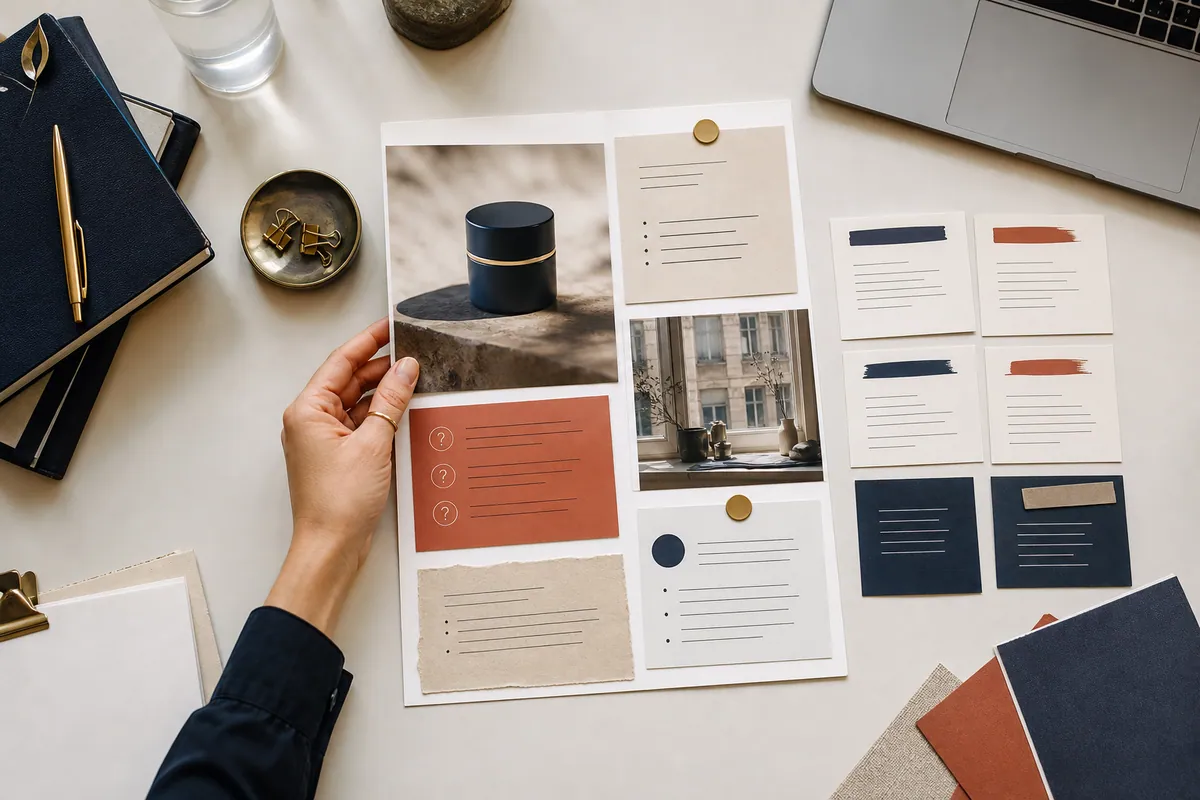
AI can reshape that material for different channels. It should not manufacture the experience, quotation or result.
UK advertising rules do not disappear because AI created the asset. In June 2026, the ASA and CAP guidance on AI and deepfakes reiterated that the CAP Code is media-neutral. Claims still need support; use of a likeness still needs permission; misleading presentation is still misleading.
A four-week workflow test
Choose one strong source item and two channels. For four weeks, compare the assisted process with the old one using:
- Total human minutes, including briefing, correction and approval.
- Acceptance rate: how many drafts were genuinely worth finishing?
- Fact corrections: how often did the draft distort or invent something?
- Voice corrections: how much rewriting was needed to sound like you?
- Audience outcome: replies, qualified enquiries, saves or another measure connected to the purpose.
If time falls but correction rises, the workflow is shifting effort rather than removing it. Improve the source brief or make fewer derivatives. Scale only when the output remains useful after a real person has checked it.
The point isn’t “AI marketing” — it’s time back
Done well, AI doesn’t make your marketing robotic; it gives you back the hours you were spending on reformatting and first drafts, so you can put them into the strategy, positioning and creative that actually move the needle. The businesses that win with AI in marketing aren’t the ones that automate the most — they’re the ones that automate the boring parts and get more human everywhere else.
If you’d like to build these workflows on your own real campaigns — your content, your list, your brand voice — that’s what we do together in AI marketing training. Or book a private lecture and bring the marketing job that’s eating your week.
Frequently asked questions
Can AI do marketing for me?
Not on its own. AI speeds up the parts of marketing you already understand — drafting, repurposing, research, variations — but it can't set your strategy, know your customer, or judge what's on-brand. Think of it as a fast junior helper, not a marketer. The direction still has to come from you.
What are the best AI tools for marketing?
For most people, a single good AI assistant plus the tools you already use (your email platform, your CMS, your analytics) covers the majority of workflows. Specialist tools help later for specific jobs, but you don't need a big stack to start — the quality comes from how you brief the AI, not which tool you pick.
Will AI-written content hurt my SEO?
Not by itself — search engines reward genuinely helpful content regardless of how it was drafted, and penalise thin, mass-produced pages regardless of who wrote them. The risk isn't 'AI'; it's publishing unedited, generic, unchecked content at scale. Use AI to draft faster, then add real expertise, facts and edits before anything goes live.
How do I keep AI content on-brand?
Show it, don't describe it. Paste two or three examples of your existing writing and say 'match this voice and length.' This few-shot approach beats adjectives like 'professional but friendly' every time. Keep a short brand-voice note and your best examples in a reusable prompt.
Is it safe to use AI for marketing?
Generally yes, with two rules: don't paste confidential customer, financial or personal data into a consumer chatbot without checking how it's handled, and always fact-check anything the AI states as true before you publish it. For anything customer-facing, a person reviews and approves before it goes out.
How much time can AI actually save in marketing?
It depends on the task, so be sceptical of fixed figures. The real gains come from the repetitive, high-frequency jobs — turning one piece of content into five, drafting variations, briefing and first drafts — that quietly eat hours every week. Automate those and you free up time for the strategy and creativity AI can't do.